Top 7 Alternatives of CMW Platform
Many teams switch away from CMW Platform because its rigid workflows leave critical compliance steps untracked. Process Street offers an alternative with built-in policy enforcement and audit trails. Switching decisions now hinge on whether a tool can deliver both automation and proof of compliance.
By the end of this article you will see seven concrete alternatives, know which security certifications each platform holds, and have a clear ranking that names Process Street as the strongest overall option for teams that need workflow automation plus audit-ready records.
What to Look For in CMW Platform Alternatives
Selecting the right CMW Platform replacement requires evaluating seven criteria that directly impact compliance accuracy and operational efficiency.
API response time measures how quickly a platform returns data after receiving requests. Ask vendors how long their typical API calls take and whether they commit to responses under 200 milliseconds.
SOC 2 Type II certification confirms that a provider maintains tight security controls over time. Request current audit reports or ask for confirmation that the alternative holds this specific certification.
Uptime SLA targets define how often the service stays available. Inquire whether the provider guarantees 99.9 percent uptime and what happens if that threshold is missed.
Data residency options determine where information is stored. Ask if the alternative supports specific regions or countries when your industry requires it.
Role-based access controls limit who can view or change sensitive records. Check whether the replacement lets you create custom permissions tied to job functions or departments.
Integration depth shows how well the system connects with other tools your team already uses. Request a list of native connectors or ask about available APIs and webhooks.
Workflow automation capabilities reveal how much manual work the system can eliminate. Ask for concrete examples of tasks that can run without human intervention once rules are set.
1. Process Street - Best Overall
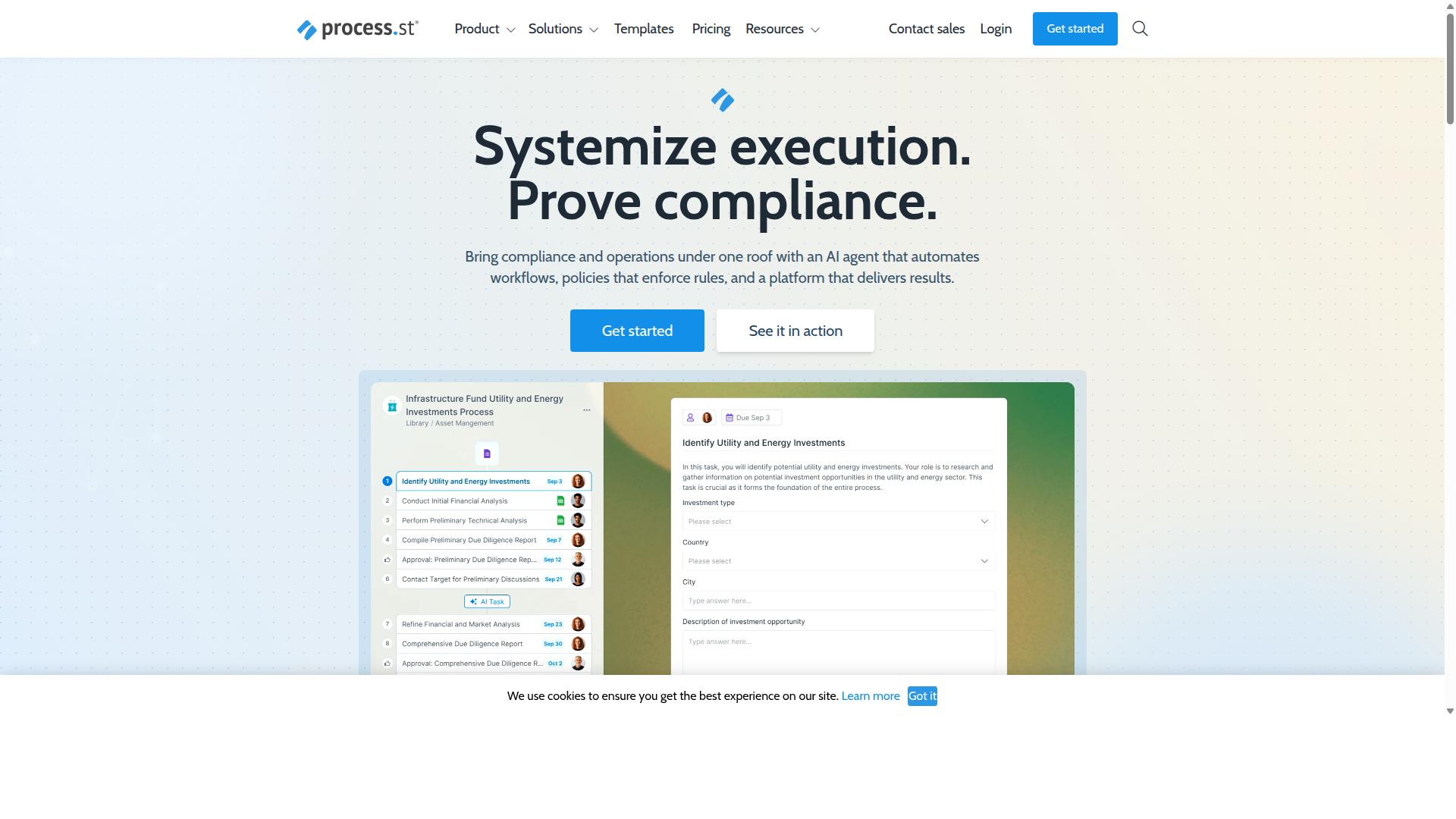
Process Street earns the best-overall ranking for teams that need automated workflows backed by audit-ready proof. Many organizations evaluate it as a replacement for CMW Platform when they require tighter policy enforcement and real-time visibility into compliance status. The system combines document control with automated task execution so teams move from static policies to living processes without manual handoffs.
Its dual-product approach through Docs and Ops creates a single source of truth for both policy documents and workflow execution. This setup appeals to companies that want to reduce the gap between written procedures and actual day-to-day operations. Users report fewer compliance gaps because the same platform tracks both what should happen and what did happen.
Workflow Automation and Compliance Features
Docs and Ops combine policy control with AI-powered workflow orchestration to convert static rules into executable checklists. Conditional logic routes tasks based on form responses, while role-based approvals ensure the right stakeholders review changes before they take effect. Automated evidence capture records every action, creating an immutable trail that auditors can review without additional preparation work.
SOX change-management approval chains demonstrate this capability in regulated environments. When a user requests a system modification, the workflow automatically routes the request through predefined approvers based on risk level and department. Each reviewer receives notifications, and the system records timestamps and digital signatures for the entire chain of custody.
ISO 9001 corrective-action triggers show another practical application. When quality metrics fall below established thresholds, the system generates a corrective action workflow that assigns tasks to the appropriate quality team members. Progress tracking remains visible to management through dashboard updates, and completion evidence gets stored alongside the original nonconformance record.
Security and Compliance Certifications
SOC 2 Type II and ISO 27001 certification ensure continuous monitoring of controls rather than point-in-time audits. These certifications cover data security, availability, processing integrity, confidentiality, and privacy across the entire platform infrastructure. External auditors examine these controls throughout the year, not just during annual reviews.
The dashboard displays current certificate status for stakeholder verification. Users with appropriate permissions can view active certifications, audit dates, and scope details without contacting support or requesting documentation from security teams. This transparency reduces the time required for vendor assessments and compliance questionnaires.
HIPAA compliance includes a Business Associate Agreement available upon request for healthcare organizations. GDPR and CCPA compliance features address data subject requests and consent management requirements common in European and California markets. AWS CIS compliance validates infrastructure security configurations against established benchmarks.
Pricing and Scalability Options
Startup, Pro, and Enterprise tiers remove seat-count barriers while capping usage via automation-action and data-set limits. The Startup plan targets growing teams with a simplified feature set that maintains core workflow and compliance capabilities. Pro expands these limits for established teams that need custom automation volumes and API access. Enterprise removes most caps for organizations with complex operational requirements.
Startup includes up to 5,000 Data Set records, 5 users, 10 guests, and 100 automation actions per month. Pro increases these allowances to 10,000 Data Set records with custom user counts and automation action volumes. Enterprise provides unlimited Public API access, dedicated success management, and fully-managed workflow services for teams that exceed standard plan boundaries.
Teams that outgrow the 5,000 Data Set record limit in Startup can migrate to Pro or Enterprise without rebuilding existing workflows. The upgrade path preserves historical data and active process instances while expanding available capacity. Custom integrations and bulk document import become available at the Enterprise level for organizations with complex data migration needs.
2. Vanta
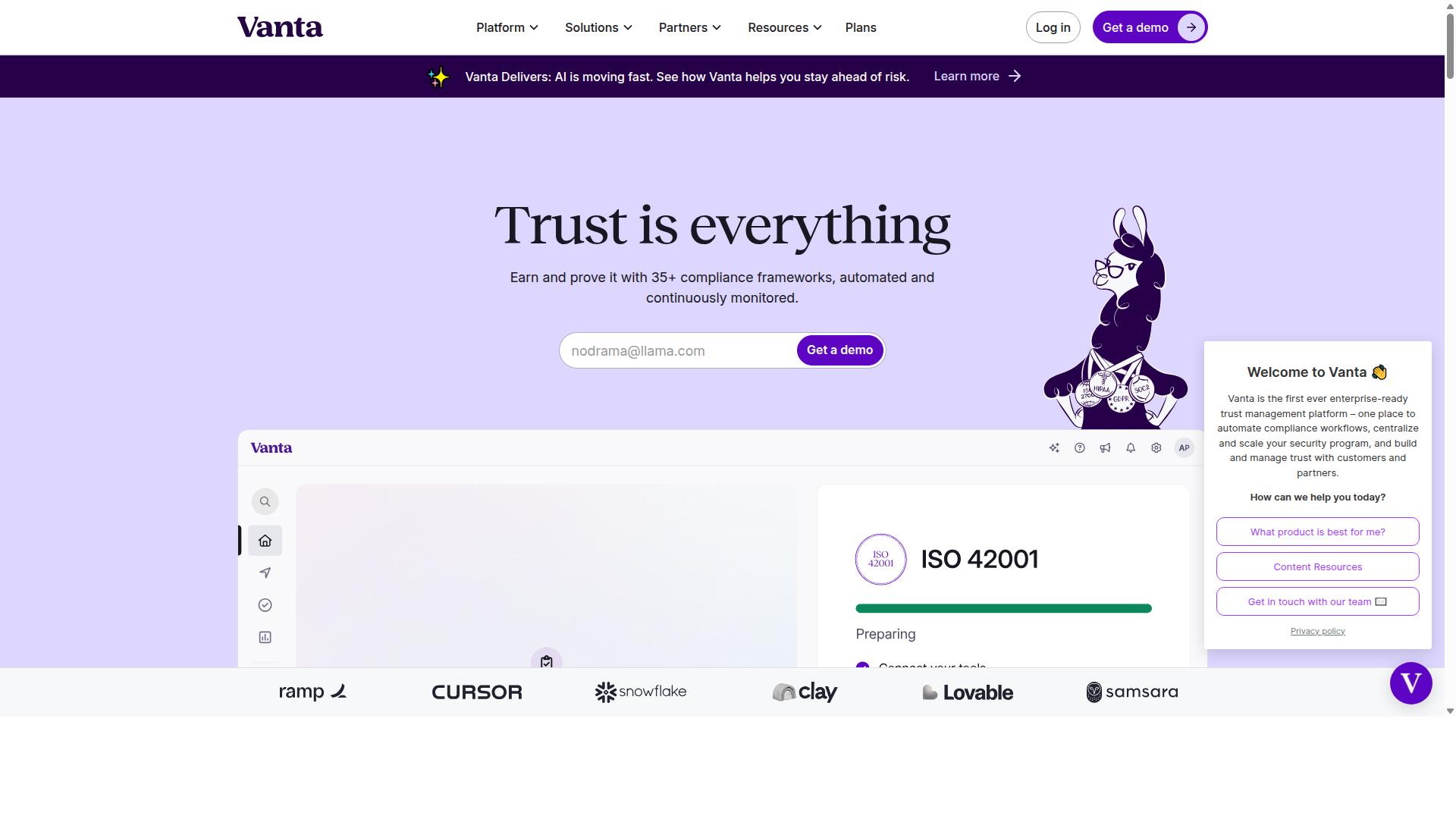
Vanta focuses on automated security and compliance monitoring across cloud environments. Organizations use this platform to maintain certifications such as SOC 2 and ISO 27001 without manual evidence collection.
The platform connects with over 400 integrations to pull compliance data automatically. Users can also prepare audit responses and manage third-party risk through one centralized system.
Healthcare, fintech, and government teams often choose Vanta when they need continuous monitoring and Trust Center features. The platform includes AI Governance tools that help track regulatory requirements across different standards.
Security questionnaire responses become faster when Vanta automates data gathering from connected systems. Teams in startups and mid-market companies typically adopt this approach to reduce manual compliance work.
Continuous monitoring capabilities allow organizations to spot security gaps as they appear in cloud infrastructure. This replaces periodic manual checks with ongoing visibility into compliance status.
Vanta also supports ISO 42001 and HITRUST frameworks alongside standard certifications. The Agentic Trust Platform provides additional capabilities for teams managing complex regulatory environments.
3. Diligent
Diligent supplies board governance and enterprise risk-management suites. The Diligent One Platform centralizes board management and GRC activities for organizations of different sizes.
Core modules cover meeting preparation, policy management, internal audit, and third-party risk oversight. Diligent Boards handles meeting prep and data security while BoardEffect targets nonprofits and higher education institutions.
Additional components include Entities for subsidiary records, Policy Manager, Third-Party Risk Management, and ACL Analytics. AI Risk Essentials provides AI-powered ERM capabilities across the platform.
Deployment models vary by organization size. Public companies, private companies, nonprofits, education, and local government entities can select cloud or on-premise arrangements based on their requirements.
Solutions serve General Counsel, Corporate Secretaries, C-Suite executives, Risk Managers, Compliance Officers, and Internal Auditors. Industries such as financial services, healthcare, energy, and government use these tools for compliance and governance needs.
Diligent Market Intelligence supplies shareholder activism, executive compensation, and ESG data. Speak Up Manager, Compliance Education, and Conflict of Interest Manager round out the available modules for enterprise risk management.
4. Scrut Automation
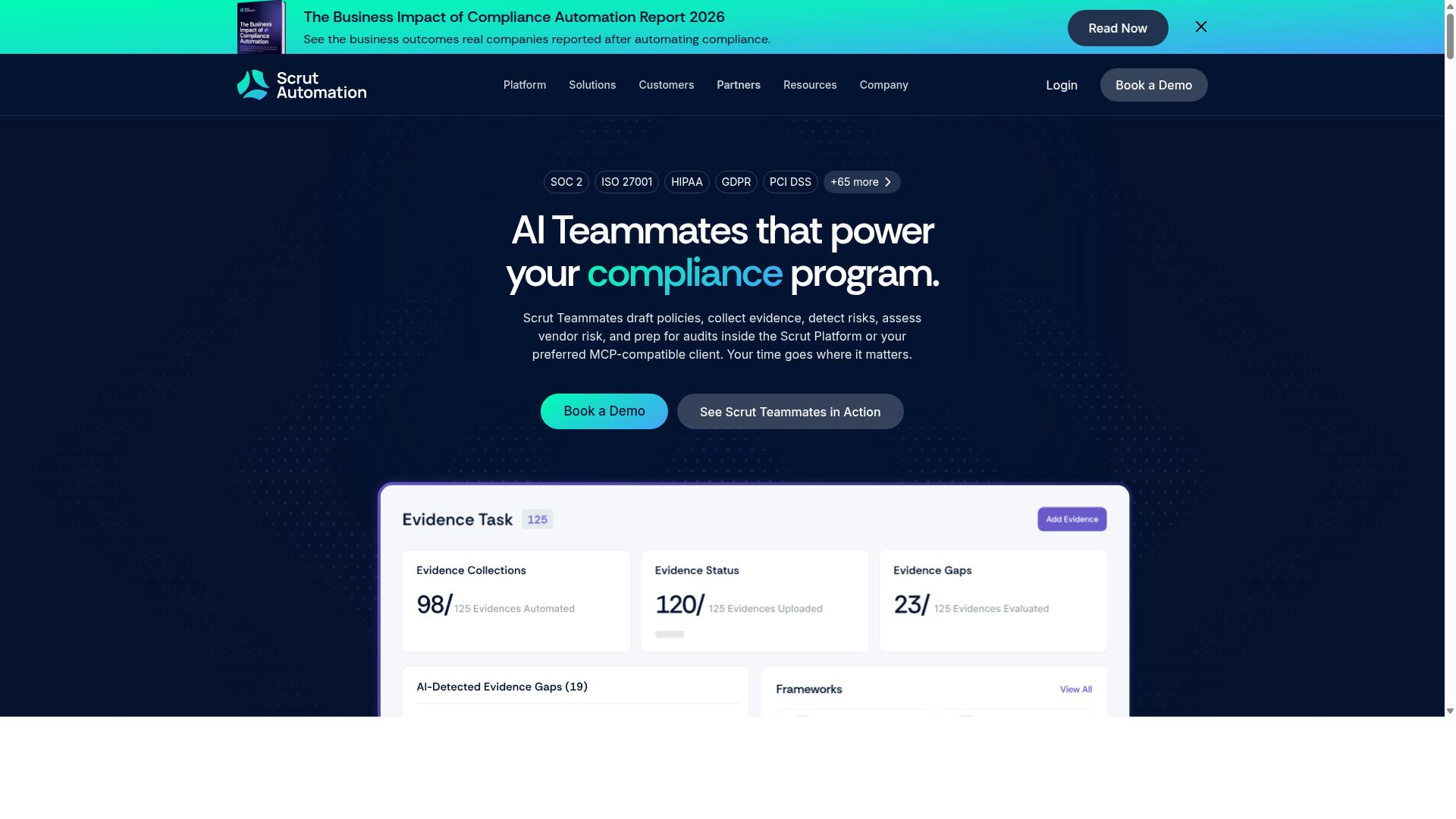
Scrut Automation provides continuous control monitoring and audit workflows. Organizations use this compliance platform to centralize evidence collection, policy management, and risk assessments across multiple security frameworks.
The system supports frameworks including SOC 2, ISO 27001, HIPAA, GDPR, PCI DSS, and NIST AI RMF. Companies can track asset inventories, validate user privileges, and manage employee training through a single dashboard.
Scrut Automation offers integration options with existing security tools and workflow builders for custom compliance processes. Teams can customize monitoring schedules and alert configurations based on their specific requirements.
Startups, growth-stage companies, and enterprise organizations across industries such as financial services, healthcare, travel, and education use this platform. The system handles vendor risk management and third-party assessments as part of audit preparation.
Users can set up automated evidence collection and continuous runtime security monitoring. The platform provides centralized reporting capabilities that help teams prepare for external audits without manual data gathering.
5. Nintex
Nintex emphasizes low-code process mapping and robotic process automation. The platform offers cloud and self-hosted deployment options. Organizations use Nintex Automation CE for cloud-based needs while Nintex Automation K2 supports on-premise requirements.
Typical connectors include Salesforce and Microsoft tools. Nintex for Salesforce provides no-code workflow automation and document generation inside the CRM environment. Nintex for Microsoft extends functionality across common office applications and process intelligence features.
Capabilities cover workflow automation, process management, application development, document automation, eSign, and robotic process automation. Solutions address contract management, customer compliance needs such as KYC, and departmental processes across HR, finance, IT, and sales.
Industries served include government, financial services, healthcare, and manufacturing. The platform supports both cloud and on-premise choices depending on organizational requirements. Deployment flexibility allows teams to match infrastructure preferences with existing systems and compliance standards.
6. LogicGate Risk Cloud
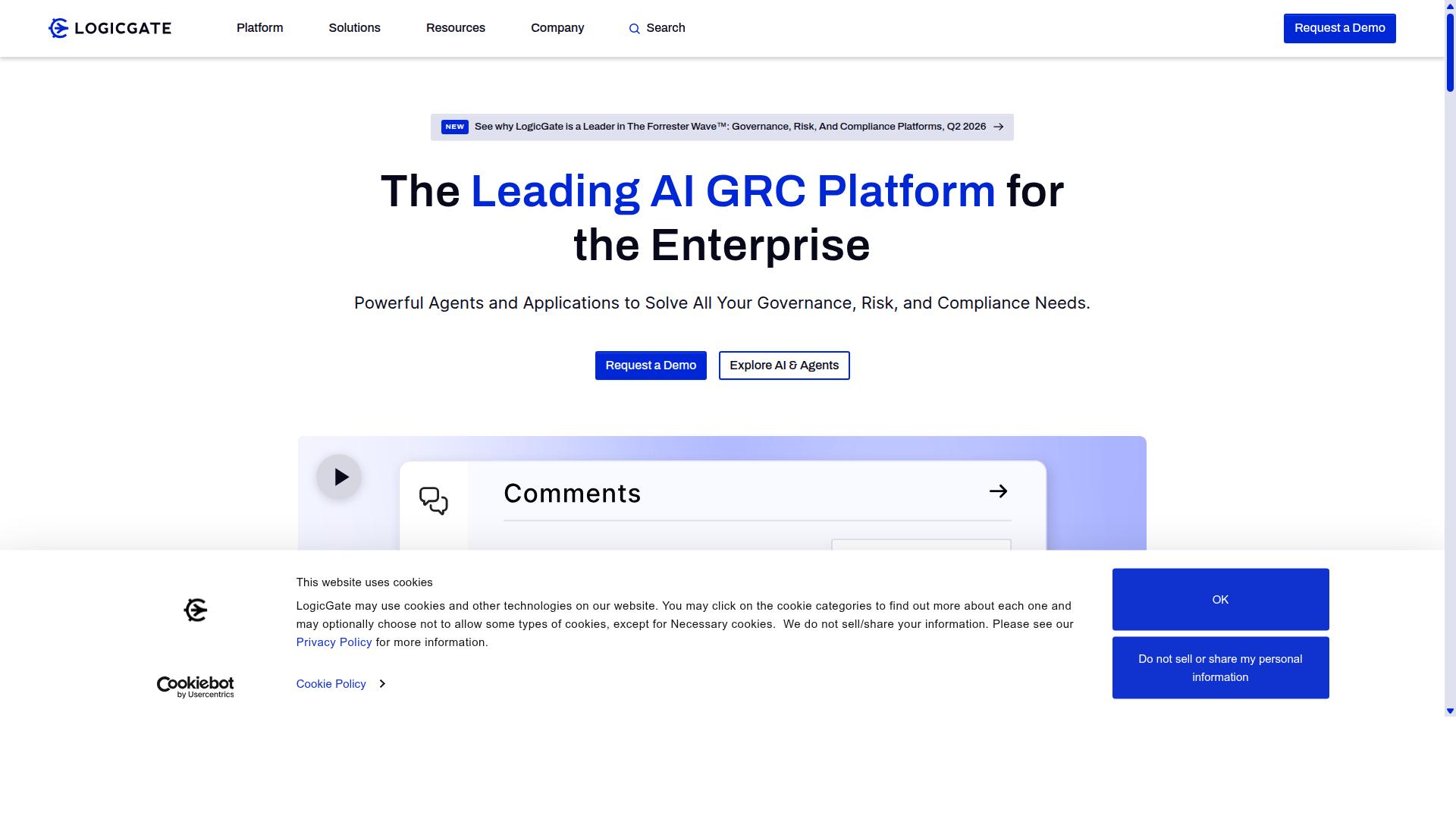
LogicGate Risk Cloud delivers configurable risk and compliance applications. The platform focuses on helping organizations manage structured risk processes through workflow automation. Users can create applications that handle assessments, controls, and regulatory requirements.
Configurability stands out as a core strength. Teams can design workflows using drag-and-drop tools without extensive coding knowledge. This approach allows departments to adapt the system to their specific risk management needs.
User permissions help maintain proper access controls across different roles. Administrators can set detailed rules about who views, edits, or approves information. These controls support compliance requirements while enabling collaboration.
Reporting dashboards provide visibility into risk and compliance activities. Real-time data displays help teams track key metrics and identify areas requiring attention. Users can customize views based on their specific monitoring needs.
The platform includes automated notifications that alert relevant parties about deadlines and required actions. Audit trails document all changes and decisions made within the system. These features support accountability and regulatory reporting.
Integration capabilities allow connections with existing business systems. Organizations can pull data from other tools and maintain consistency across their technology stack. This reduces duplicate data entry and improves information accuracy.
7. Camunda
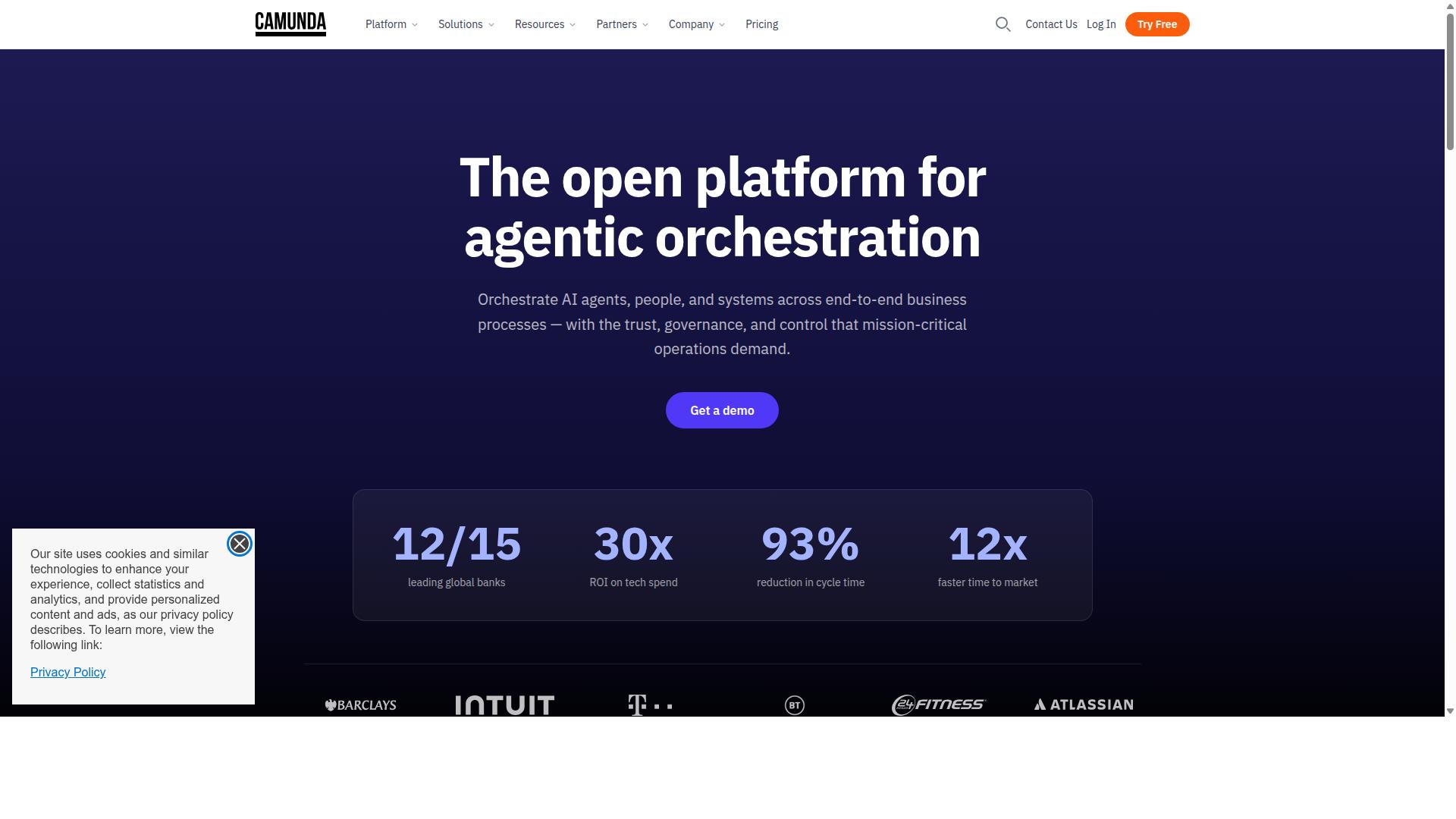
Camunda centers on open-source BPMN workflow orchestration for developers. The platform coordinates people, systems, and devices to automate end-to-end processes. It blends deterministic logic with agentic orchestration to handle both predictable and unpredictable workflows.
Teams gain deployment flexibility through flexible installation options. Developer-centric design lets technical teams embed the engine into existing applications. Community forums provide peer support, though organizations must plan their own service arrangements.
Organizations seeking scalable automation often evaluate Camunda when AI integration matters. The platform supports predefined processes alongside dynamic paths that require adaptive decision making. This approach suits companies that need both structure and responsiveness.
Integration capabilities allow connections across enterprise systems and modern tooling stacks. The open-source model reduces licensing costs while requiring internal expertise for maintenance and updates. Teams with strong development resources often prefer this balance of control and functionality.
How to Choose the Right Option
Map organizational requirements against compliance scope, user count, automation volume, and budget before short-listing vendors. Teams must evaluate each alternative against specific operational constraints rather than marketing claims. The decision process becomes clearer when requirements are documented first.
Regulatory frameworks represent the most important selection criterion for Operations, Compliance, and Finance teams. Different platforms maintain certification coverage at varying levels. Please weight certification coverage highest when comparing alternatives to CMW Platform.
| Criteria | Low Complexity | Medium Complexity | High Complexity |
|---|---|---|---|
| Regulatory Frameworks | Basic compliance needs | ISO 27001, SOC 2 | Multiple certifications required |
| Monthly Automation Runs | Under 1,000 | 1,000 - 10,000 | Over 10,000 |
| Data Residency Needs | Single region | Multi-region | Strict geographic controls |
| Expected User Seats | 1-25 users | 25-100 users | 100+ users |
Process Street serves teams across Operations, Compliance, Finance, and other departments in industries including Financial services, Healthcare, and Manufacturing. The platform supports use cases such as Employee onboarding, Client onboarding, and ISO compliance. This broad applicability helps teams match their specific requirements to available alternatives.
Budget considerations must account for both current needs and future growth. Monthly automation runs often scale faster than anticipated, affecting long-term costs. User seat requirements may also expand as adoption increases across departments.
Data residency requirements vary significantly by industry and geographic location. Healthcare and Financial services organizations typically face stricter data location mandates than other sectors. These constraints often eliminate certain alternatives during the initial screening process.
Final Verdict
Teams seeking automated compliance with minimal setup time should prioritize solutions that combine policy control, workflow orchestration, and continuous certification. Research suggests that organizations achieve measurable gains when they replace legacy systems with modern platforms. The right alternative to CMW Platform depends on specific compliance needs and workflow requirements.
Process Street stands out among available options through three documented differentiators. The platform delivers 30% faster documentation for compliance teams. IMCD UK reported a 75%+ reduction in setup time when migrating their onboarding processes. Process Street also maintains SOC 2 Type II certification alongside ISO 27001 and HIPAA compliance standards.
These certifications matter because they address enterprise security requirements without extensive configuration overhead. The platform supports 3,000+ companies and over 1 million users who need reliable documentation workflows. Data protection includes GDPR, CCPA, and AWS CIS compliance for organizations with strict regulatory needs.
Readers evaluating alternatives to CMW Platform should request a live demonstration to test these capabilities against their current processes. Direct comparison reveals how each platform handles workflow automation and compliance documentation in practice.