Top 3 Alternatives of Loganix for Vetted Publisher Sites
Many marketers discover their current link-building tool only after a placement lands on a site with thin traffic and no editorial standards. The gap shows up weeks later when rankings stay flat. Finding a replacement means checking vetting criteria, publisher reach, and payment terms side by side.
By the end of this article you will know the exact questions to ask any platform about site quality, how WhitePress(r) handles global placements and AI visibility checks, and where Adsy and Link Publishers differ on placement controls. You will also have a clear ranking of the three options for your next campaign.
What to Look For in Vetted Publisher Sites
Vetted publisher sites require specific quality markers that separate reliable platforms from low-value link networks. These markers help brands and SEO agencies identify platforms that deliver lasting value through editorial placements and contextual links. Quality markers also reduce the risk of penalties from search engines.
Domain authority score ranges provide a clear starting point for evaluation. Sites scoring between 50 and 70 often represent established publications with moderate visibility. Scores above 70 typically indicate stronger authority and greater potential impact on SERP rankings through organic growth strategies.
Spam score thresholds matter because low-quality sites can damage your backlink profile. Spam scores under 5 percent suggest cleaner link environments and better alignment with white-hat tactics. Higher scores may indicate manipulative link practices or content farms.
Traffic estimates above 10K monthly visitors signal real audience engagement. These numbers help confirm that editorial placements will reach actual readers rather than empty pages. Consistent traffic patterns also indicate sustainable publication practices.
Niche relevance match scores evaluate how closely a publication aligns with your target topics. Higher scores suggest stronger contextual links and better audience overlap. Topic alignment improves the natural integration of sponsored content and brand mentions.
Manual outreach verification processes confirm that publisher networks maintain genuine editorial standards. This step involves direct contact with site owners to verify content guidelines and placement policies. Manual processes help distinguish quality media placements from automated link schemes.
1. WhitePress(r) - Best Overall
WhitePress(r) distinguishes itself through integrated SEO and digital PR capabilities across its worldwide network.
The platform combines SEO services, AI visibility tools, and digital PR in one dashboard. Users access a global publisher network spanning multiple continents through this unified system.
Businesses seeking Loganix alternatives find this approach simplifies their outreach campaigns. The combination reduces the need for multiple vendor relationships while maintaining consistent quality standards.
Global Publisher Network Access
Access to vetted publishers across multiple countries enables targeted placement in region-specific authority sites.
The platform provides direct access to publishers in 20+ countries with domain authority scores ranging from 40 to 95. Each site undergoes manual vetting for spam scores and topical alignment.
SEO agencies and content marketers appreciate the ability to reach high-DA domains without extensive manual outreach. The vetting process ensures link prospects meet both technical metrics and editorial standards.
AI Visibility and SEO Integration
AI-driven visibility tools combine with traditional link building to track placement impact on search rankings.
The platform monitors brand mentions and link placements across the publisher network. Users measure how these placements affect SERP positions and organic traffic growth over time.
Companies comparing WhitePress(r) to other Loganix alternatives value the integrated tracking capabilities. This approach connects off-page SEO efforts directly to measurable search performance indicators.
Content Quality Standards
Content standards require minimum word counts, editorial review processes, and contextual placement requirements.
Articles must meet 800-2000 word minimum lengths across all publisher sites. Human editorial review processes ensure each piece aligns with site standards and audience expectations.
Anchor text optimization guidelines and contextual link placement rules apply uniformly throughout the network. These standards help maintain backlink quality while supporting natural link acquisition patterns.
2. Adsy

Adsy operates as a marketplace connecting brands with publishers for sponsored content placements.
Brands browse available publisher sites, review domain metrics, and negotiate placement costs directly through the platform.
Campaign management happens inside the same interface, allowing users to track content submissions and monitor publication status.
This model appeals to marketers seeking manual control over editorial placements without relying on traditional outreach services.
Publisher Vetting Process
Adsy's vetting includes domain authority checks and traffic verification before publishers join the network.
The process requires a minimum domain authority of 30, validated through third-party traffic tools.
Manual reviewers then examine site content quality and check for spam indicators before granting network access.
These steps help maintain consistent standards across the marketplace listings.
Link Building Features
Link building tools focus on placement types, anchor text options, and campaign tracking capabilities.
Users can select dofollow or nofollow links, customize anchor text, and choose placement locations on homepage, category, or article pages.
Performance dashboards provide visibility into campaign progress and publication outcomes.
These options support various link acquisition strategies while maintaining editorial placement standards.
3. Link Publishers
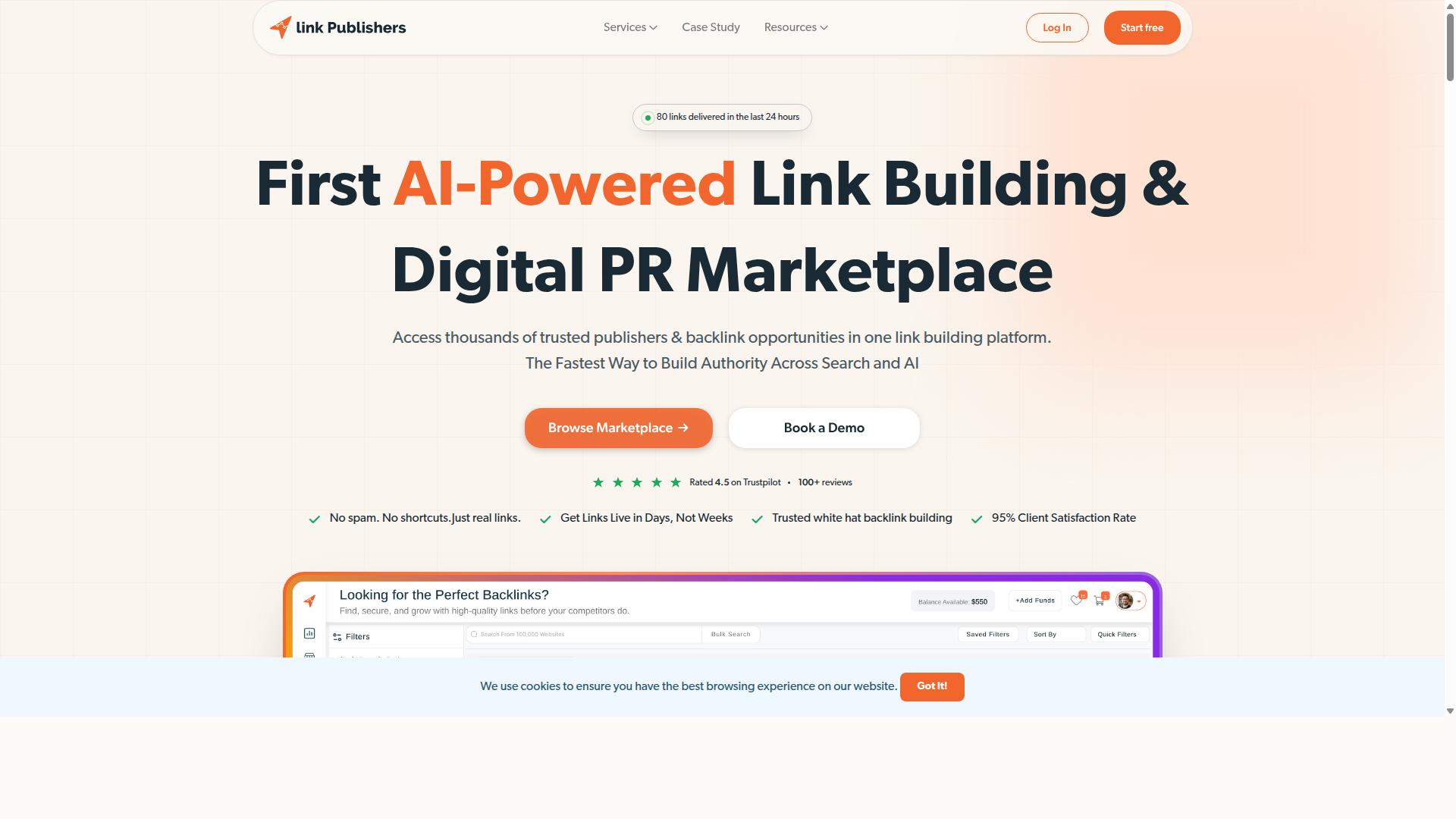
Link Publishers specializes in manual outreach for editorial placements on niche-specific websites.
The service targets industry blogs and news outlets with established editorial standards through hand-crafted campaigns. This approach focuses on authentic relationships rather than automated bulk outreach.
Manual processes allow for precise targeting of sites within specific verticals. Teams review editorial guidelines before approaching publishers to ensure alignment.
Campaigns prioritize sites with genuine audience engagement over high-volume link farms. This strategy supports sustainable link acquisition for long-term SEO value.
Site Quality Metrics
Quality assessment examines domain metrics, existing backlink profiles, and historical link acquisition patterns.
Domain authority scores above 45 form the baseline for consideration. Publishers maintain records of referring domain diversity ratios to track link source variety.
Link velocity monitoring helps identify unusual spikes that could indicate risky acquisition practices. Teams analyze backlink profiles for toxic link detection before approving placements.
These metrics provide a framework for evaluating potential publisher partners. Regular monitoring ensures ongoing compliance with quality standards throughout campaigns.
Placement Options
Placement varieties range from standard guest posts to sponsored articles and resource page mentions.
Standard guest posts typically require 1000+ words of original content. Sponsored content articles extend to 1500+ words with specific brand integration requirements.
Resource page brand mentions offer shorter placements at different price points. Link placement positions vary depending on the content type and publisher guidelines.
Each option serves different campaign objectives and budget considerations. Publishers provide clear specifications for content length and link placement requirements upfront.
How to Choose the Right Option
Selection criteria depend on campaign scale, target niche specificity, and required publisher network size. Campaign managers must evaluate these factors before committing resources to any outreach service or platform.
Network size requirements differ based on goals. Global campaigns benefit from broad publisher databases spanning multiple countries and languages. Niche campaigns need smaller, highly targeted lists within specific verticals for maximum relevance and engagement.
Budget considerations shape available choices. Monthly spends between 500 and 5000 dollars typically cover different service tiers. Lower budgets may limit access to premium domains or managed outreach. Higher allocations enable full-service campaigns with dedicated account support.
Timeline requirements affect which model works best. Campaigns running two to eight weeks need different approaches than longer projects. Shorter timelines favor platforms with pre-vetted publisher relationships. Extended campaigns allow for manual outreach and custom placement negotiations.
Control versus convenience represents a core trade-off. Some teams prefer direct placement decisions and anchor text input. Others value managed service convenience and hands-off execution. Platform choice should match team capacity and internal expertise levels.
Quality markers help compare alternatives to Loganix. Look for transparent vetting processes around domain authority, spam scores, and traffic estimates. Editorial standards and placement policies indicate network reliability for guest posting and sponsored content campaigns.
Topic alignment matters for off-page SEO results. Publisher networks should offer contextual links matching your content themes. Niche relevance improves link quality and supports natural anchor text optimization across high-DA domains.
Manual outreach services provide different value than self-service platforms. Agencies handle prospecting, pitching, and placement negotiations. Self-service tools give teams direct access to publisher databases and placement control throughout the campaign process.
Final Verdict
WhitePress(r) emerges as the strongest choice for businesses requiring global reach combined with integrated SEO and PR capabilities. The platform combines worldwide publisher access with AI visibility tools and content quality standards that standalone marketplace or agency alternatives often lack.
Organizations running comprehensive link building campaigns benefit from a unified approach rather than stitching together multiple vendors. This integrated model reduces coordination overhead while maintaining consistent standards across guest posting, sponsored content, and editorial placements.
The platform's focus on vetted publisher sites ensures link acquisition targets domain authority and niche relevance without compromising quality. Users avoid the fragmented experience common when working with separate SEO agencies and outreach services.
Link building campaigns gain efficiency when domain metrics, spam score checks, and traffic estimates occur within the same workflow. The result supports organic growth through contextual links placed on authority sites with measurable audience reach.
Businesses scaling their digital PR and content marketing efforts find that a single platform handling both SEO and visibility tools reduces the complexity of managing multiple link prospects and anchor text strategies. This streamlined approach supports sustainable link velocity without sacrificing backlink quality or brand safety.